Dover/Vienna Assessments
As any employer is aware the cost of industrial equipment and vehicles is ever increasing, therefore it is imperative to ensure that the operators and drivers employed to operate this equipment are individuals who are capable of working under pressure and in situations which require constant concentration.
According to validity studies done both internationally and locally, psychomotor assessment can predict actual operator and driver performance with an accuracy of more than 80%, thereby reducing the occurrence of accidents on site and on the road caused by the placement of drivers and operators not possessing sufficient concentration or poor reaction skills.
With the use of the Dover Psychomotor Test System, we can offer your company the peace of mind that comes from knowing your drivers and operator do possess the necessary co-ordination, concentration and skills needed to avoid unnecessary accidents.
The Dover Test System
The Dover System, also known as the Vienna, was developed in West Germany during the Second World War. The acclaimed computerised system is currently distributed internationally by the Schuhfried C.O. in Austria.
Introduced in South Africa in 1982 the Dover system is accredited by the Health Professions Council of South Africa (HPCSA). The system is completely unbiased toward any individual or group, using norms based on more than 500 tests done on men and women in the South African Mining industry.
The aim of the psychomotor assessment is to determine whether a person can operate safely and carefully and not to determine whether they can operate or not. This assessment shows us whether our operators and drivers are most likely to make errors and display poor operating behaviour which leads to accidents. This tool is therefore of vital importance as it involves vision, co-ordination and mental processing.
The Dover test system consists of numerous tests compiled into a battery to more accurately assess necessary skills such as hand-eye-foot co-ordination, auditory discrimination, and sustainability of concentration despite overwhelming environmental factors as well as visual perception. Subject’s performance level is tested against time constraints as a stress factor. The candidate, who is unable to cope under stress, or ever recover thereafter, often becomes a danger to himself as well as others. The cost implications are also directly related.
Our standardised driver/operator battery consists of the following five tests:
Determination Test (DT)
This looks at basic reactive functioning, assuming how candidates will respond to stimuli in various environmental conditions. Candidates have to respond to visual and auditory stimuli, using eye-hand-foot co-ordination to accomplish this, in 3 types of conditions:
- Normal conditions (e.g.: how the candidate responds to driving in normal traffic, such as having to respond to signals such as robot changes)
- Crisis conditions (e.g.: how the candidate responds to crisis, such as a sudden nearby accident or other stress-related incident)
- Crisis-recovery conditions (e.g.: how the candidate responds after the crisis is over and he/she has to return to normal levels of reactive functioning)

2Hand Co-ordination (2HAND)
This looks at basic manual co-ordination using both hands together, focusing on speed and accuracy. Basic practical trainability potential (the assumed speed at which new hands-on skills can be learned / acquired) is also assessed.

Cognitrone (COG)
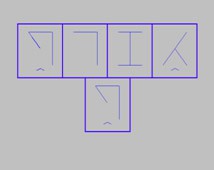
This looks at the candidates basic environmental shape recognition ability combined with basic decision-making ability (e.g.: the ability to recognise road signs, such as stop streets, and make appropriate decisions in time, such as to stop on time).
Time Movement Anticipation (ZBA)
This looks at the candidates ability to estimate both the speed and direction of moving objects, such as other vehicles on the road (e.g.: when having to turn in front of an oncoming vehicle, candidates need to be able to estimate how quickly, and in what direction, the vehicles is coming).

Signal Detection (SIGNAL)
This looks at the candidate’s ability to maintain concentration and respond to environmental stimuli in routine or monotonous conditions (such as a long distance road trip or doing repetitive work daily).

For more information on, or a demonstration of how IHS can improve your selection/development and retention of employees with the use of the Dover System, please contact us on marciak@ihamss.co.za